

You may have heard of psychometric tests but never actually taken one . These tests are quite common for companies and society in general to determine if you are fit and capable of performing certain social activities or working in a particular job. It's important to understand what this type of test entails and, above all, to have some ideas on how to pass it more easily, whether it's for driving, working, studying, or obtaining a specific license.

What is a psychometric test?
Psychometric tests are structured and objective assessments administered to candidates for a job or specific type of activity. Their purpose is to measure candidates' aptitudes, abilities, intelligence, personality, interests, and values . These tools are designed using scientific criteria to reduce subjectivity in the evaluation process.
These tests are used to assess aspects such as intellectual capacity, memory, abstract reasoning, numerical aptitude, spatial aptitude, verbal aptitude, executive functions, and concentration . In many cases, personality tests are also administered to determine character traits, emotional stability, interpersonal skills, and stress management abilities.
Many companies in Spain use these types of tests to ensure that the employees they choose for their jobs are truly suitable. They are also used in other contexts where it is necessary to guarantee that a person has the minimum psychophysical capabilities to perform a task safely.

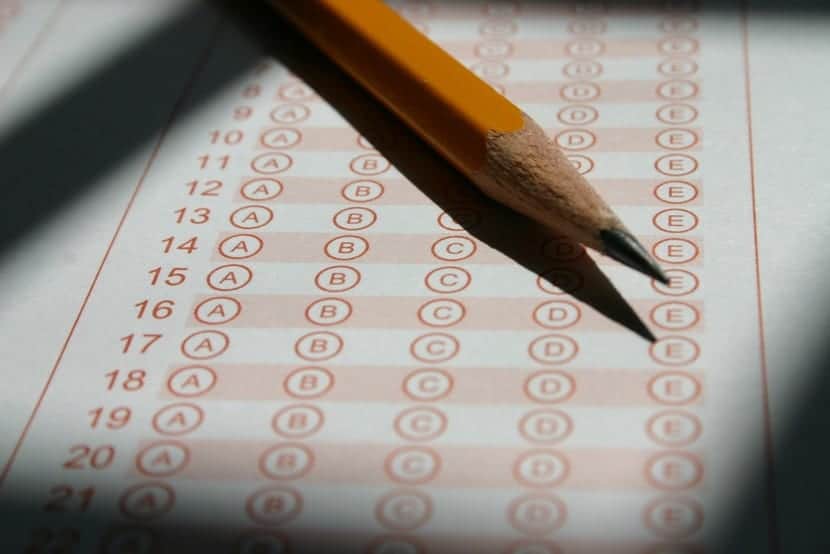
Therefore, a psychometric test is a test designed to objectively evaluate a person's abilities . These are highly structured tests where the candidate must answer a series of questions or perform short exercises within a limited time. The answers given are considered sincere and truthful , and the format is designed so that any attempt to manipulate the results does not provide a real advantage.
An important feature is that most of these tests measure the subject's maximum performance : that is, the best performance they can demonstrate in a specific skill within a given time. Therefore, it is common to find a stopwatch or a clear time limit for completing each part of the test.
Assessment is also conducted to determine if the person has any difficulties with adaptive functioning ; for example, problems maintaining attention, coordinating movements, or understanding simple instructions. This can be crucial in contexts such as driving, operating machinery, or handling weapons.
Once the analysis obtained from these tests is available, a decision will be made regarding the individual: hiring or non-hiring, fitness or unfitness to drive, granting or denying a license, etc. It is important to understand that this is merely a numerical score that does not define the person or their actual abilities in all areas of their life. It is simply a measurement based on different scales or criteria that must be interpreted by qualified professionals.
Types of tests in a psychometric exam

A psychometric test is not always the same: it varies depending on its purpose (driving, working, obtaining a license, etc.). However, most of them combine several sets of tests which, together, provide a fairly comprehensive view of the person being evaluated.
In general, a psychometric test can include:
- Health questionnaireswhere questions are asked about illnesses, treatments, and relevant medical history.
- Basic physical fitness tests, such as vision, hearing, coordination, and reflexes.
- Cognitive tests, which assess attention, memory, reasoning, or problem-solving.
- personality tests, aimed at understanding emotional and behavioral traits.
From these general blocks, more specific tests are deployed, which are usually grouped into the following types:
1. Attention and concentration test
These tests assess the ability to remain focused on a stimulus for an extended period, to detect subtle changes, or to locate a specific element among many distractors. They are often intentionally monotonous , precisely to determine if the person can maintain their level of performance without becoming distracted.
A classic example is selecting only certain letters or numbers from a long list, or detecting when a different stimulus appears in a nearly identical series. These types of tasks are essential for assessing safety in driving, surveillance, or working with machinery.
2. Reasoning test
Reasoning is the ability to organize information, draw conclusions, and find quick solutions to problems. Reasoning tests can include:
- Abstract reasoning: detect patterns and relationships between figures or symbols.
- Verbal reasoning: understanding texts, analogies, synonyms, antonyms or completing sentences.
- Numerical reasoning: solve calculations, rules of three, numerical series or arithmetic problems.
- Mechanical or technical reasoning: understanding simple physical principles, pulleys, gears or basic forces, common in technical positions.
These types of tests help determine if a person is suited to the cognitive demands of a job , a specific course of study, or an activity that requires making quick and well-founded decisions.
3. Spatial Aptitude Test
Spatial aptitude refers to the ability to perceive and imagine objects in space , orient oneself, anticipate distances, and understand how a figure would appear from another angle. In many professions, and especially in driving, a good level of this skill is essential.
Among the most common tasks are deciding what an object will look like from a different perspective, mentally rotating figures, or keeping a point within specific boundaries while it moves on a screen. This skill is closely related to orientation when driving, parking, maneuvering, or operating machinery.
4. Verbal aptitude test
Communicating effectively involves understanding and expressing ideas quickly and clearly. Verbal aptitude tests measure aspects such as vocabulary, reading comprehension, grammar, and spelling . They often include exercises in synonyms, antonyms, understanding short texts, and error detection in sentences.
In the workplace, these types of tests are especially useful in positions that require dealing with the public, writing reports, negotiation, or team management.
5. Numerical Aptitude Test
Numerical aptitude relates to the ability to understand and manipulate numbers in practical situations: simple calculations, percentages, proportions, and data interpretation. The exercises are usually not very complicated if the position doesn't require a high level of mathematical skill, but speed and the number of correct answers within a given time are valued.
They are very common in selection processes for administrative, financial, commercial or technical positions.
6. Tests related to executive functions
Executive functions include working memory, planning, decision-making, inhibition of impulsive responses, and problem-solving . These abilities are primarily assessed in clinical and neuropsychological settings, although some adapted tests are used in employment or licensing processes.
They are useful for observing how a person organizes their behavior, adapts to new situations, and manages complex tasks , which is key when it comes to driving safely, leading teams, or handling high-stress situations.
7. Personality test
Although not technically aptitude tests, many psychometric exams include personality questionnaires . Their purpose is to assess aspects such as emotional stability, extroversion level, frustration tolerance, responsibility, impulsivity, and interpersonal skills.
In these cases, honesty is essential , as the questionnaires often include scales to detect inconsistent or overly idealized responses. They are primarily used in personnel selection processes, firearms licensing, private security, and law enforcement agencies.
Where are the psychotechnical tests performed?
Throughout your life, you will face many occasions where you will have to take these kinds of tests. They are carried out in various areas, and it's important that you understand them so you know if you will have to take them soon and for what specific purpose.
- Labor sphereCompanies with specific skill requirements for their employees often use psychometric tests to ensure they are hiring the right people. These tests assess typing speed, verbal comprehension, numerical ability, problem-solving skills, emotional stability, and the capacity to work under pressure, among many other factors.
- Educational fieldThese types of tests are also administered to students to determine their abilities and adjust the level of the curriculum accordingly. They also help identify students' true interests and guide them in choosing their academic or professional future, as well as detect special educational needs or giftedness.
- Clinical practiceIn this area, patients' abilities and aptitudes are assessed. This allows us to determine if they have any type of impairment in their mental capacities, for example in cases of dementia, brain damage, or developmental disorders, or simply to evaluate their actual capabilities at a specific time and be able to propose specific treatments or support.
- Driving licenseDriving a vehicle involves a great deal of responsibility, and it's essential to know that you are truly capable of doing so without causing accidents. It's necessary to assess your skills before issuing a license, verifying your abilities. vision, hearing, coordination, reflexes, and overall healthThese tests are carried out in authorized psychotechnical centers and are mandatory both to obtain and to renew the license.
- Firearms licenseIn the case of police officers, hunters, or security guards, a psychometric test is required. Not everyone is capable of possessing a firearm, nor should they be. If not used correctly, it can be a great danger to oneself and others. Therefore, in addition to physical health, special evaluations are conducted on... emotional stability, self-control, and responsibility.
- Other permits and certificatesThere are also psychometric tests for specific licenses such as crane operation, nautical qualifications, ownership of potentially dangerous animals, or private securityIn all these cases, the aim is to ensure that the person has the minimum capabilities to perform that activity without putting third parties at risk.
What is a psychometric test for a driving license like?
One of the best-known psychometric tests is the one required to obtain or renew a driver's license . This exam is administered at authorized medical or psychometric testing centers and has a fairly similar structure across most of the country.
In general, the psychometric test for driving is divided into three main sections:
- Health questionnaire.
- Psychomotor or coordination tests.
- Sensory review (sight and, in many cases, hearing).
Health questionnaire
The first step is usually to ask a series of questions about your physical and psychological health . The professional will ask for information about current or past illnesses, medical treatments, history of loss of consciousness, cardiovascular, neurological, or psychiatric problems, substance use, or sleep disorders, among other things.
This questionnaire is important because certain illnesses or medical conditions can temporarily or permanently prevent you from obtaining a driver's license, or shorten its validity period or make it conditional upon specific medical reports. Not all illnesses disqualify you from driving, but they may require more frequent checkups or adjustments.
It is essential not to withhold information : omitting relevant data can pose a risk to your safety and the safety of others. If you have any medical condition or take medication regularly, it is highly recommended that you bring an up-to-date report from your doctor to the driving test, describing your condition and your ability to drive.
Coordination and reflex tests
This section assesses your psychomotor skills , that is, how your brain coordinates your body's movements. Typically, you'll be asked to use controllers in front of a monitor in a kind of "mini-game" where you have to keep one or two balls within a path without touching the edges or follow a line as closely as possible.
They may also include tasks where you must react quickly to a visual or auditory stimulus, by pressing a button or moving a control. The goal is to check that your reaction time and hand-eye coordination are adequate for safe driving.
Vision test
Sight is one of the most important senses for driving. That's why every driver's license psychometric test includes a basic eye exam . It typically consists of:
- Read letters or symbols of different sizes at a certain distance.
- Check each eye separately and both at the same time.
- To assess the ability to distinguish colors and contrasts, as well as the visual field.
If you wear glasses or contact lenses daily, you must bring them to the test, as the evaluation must be carried out under the same conditions as when you drive . If you require corrective lenses, this will be noted on your driver's license, and you will be required to use them while driving.
Hearing test
Many centers also offer a simple hearing test . They usually put headphones on you and ask you to press a button every time you hear a sound, even a very faint one. This tests your ability to perceive acoustic signals such as horns, sirens, or traffic noise, which are essential for road safety.
If you use hearing aids, it is advisable to bring them to the psychotechnical test, so that the professional can assess your hearing performance under the conditions in which you usually drive.
Cost and choice of psychotechnical center
The cost of the psychometric driving test varies depending on the center where you take it, as it is a service provided by private entities. The price typically falls within a range that can change depending on the location, the level of competition, additional services (such as direct processing with the Traffic Department or taking photographs), and the type of license you are obtaining or renewing.
It's advisable to compare prices between several nearby authorized centers, keeping in mind that the final result will always be a valid aptitude report if you pass. In some cases, driving schools or insurance companies have agreements with certain centers and offer special rates or discounts.
Tips to pass a psychotechnical exam
You might have to take a psychometric test to get a job or for any of the reasons mentioned above. You may feel some nerves or anxiety, but remember that anxiety won't help you perform better. It's important to keep your mind alert without falling into a state of excessive tension that will hinder your performance.
If you need some tips to be even calmer, don't miss the following:
- Take other practice psychometric testsIt's a way to familiarize yourself with the tool you're going to use and feel more confident with it. Even if the final product is different from the one you made, the peace of mind that comes from practicing beforehand will be very helpful. Furthermore, the daily practice Exercises in attention, calculation, reasoning, or coordination will also help you improve your results.
- Have confidence in yourselfMaintaining a positive attitude is always essential. If you keep a good optimism and healthy self-esteemThe test will go better. Your goal is to perform the test as well as possible to try to outperform the other candidates or demonstrate that you are suitable for a particular activity, but if it doesn't go well, remember that There will always be other opportunities..
- Improve your concentrationYou need to improve your concentration and attention to answer the questions as best as possible. This is the only way to ensure that the answers you give are truly what you believe to be correct at that moment. You can practice. meditation, breathing control, or specific concentration exercisesAlso, before taking the test, you should carefully read the instructions, taking all the time you need. If you have any questions, you should ask the examiner.
- Don't let yourself go without sportIt's been proven time and again that playing sports improves your mood and reduces your stress levels. Furthermore, by increasing the serotonin and other beneficial substances Naturally, you will feel more balanced and clearer-minded, which is essential for passing a psychometric test more easily.

- Sleep wellBefore the test, you should get a good night's sleep, at least 6 to 8 hours. Do not take stimulants and maintain a balance dietAll of this will allow you to keep your nerves under control. It's also important that you arrive at the test with enough time to relax and not stress about being late. Furthermore, the unpunctuality It is frowned upon in our society and can create a negative first impression.
- SincerityIt's important that if you're taking a personality test, you're honest and, above all, clear. Don't try to put down something you're not just because you think it's a better answer; that might not be what they're looking for. It's better to be honest, and if they hire you or grant you a license, then they'll know that. You haven't liedIt is important that you are consistent so that you do not falsify your personality and prevent the test's control mechanisms from detecting unbelievable answers.
- Bring the necessary documentation.In many psychometric tests, especially those related to official permits, you will need to bring ID card or NIE, recent photographs or medical reports In case you suffer from certain illnesses, finding out what you need beforehand will save you last-minute stress and possible postponements of the test.
- Don't dramatize the resultWhile it's understandable to want to pass, it's best not to turn the psychometric test into a life or death examThinking that, if something goes wrong, there are alternatives or second chances reduces pressure and promotes a more natural performance that is in line with your true abilities.
Understanding what a psychometric test is, its purpose in different contexts, and how it's structured allows you to approach it with much more composure. Preparing as much as possible, taking care of your rest and health habits, and maintaining a realistic and honest attitude will ensure these tests become a tool to demonstrate your abilities, not an insurmountable obstacle.
Table of Contents