

Carl Jung was one of Freud's disciples , but over time he distanced himself from Freud's teachings because he developed his own thinking and created a different school of thought in therapy. He became one of the most important psychiatrists and thinkers in the history of humankind. Carl Jung was the founder of depth psychology, also known as analytical psychology.
Carl Jung's psychology is based on the existence of a collective unconscious , a psychic substrate shared by all humanity that contains inherited archetypes. Unlike the personal unconscious, where the conflicts inherent in a person's experience reside and complexes are formed , the collective unconscious is the history of humanity from time immemorial. Through the interaction between the two, the individual constructs their identity and sense of self.
For Carl Jung, the symbolic, such as dreams and artistic expressions , was extremely important for understanding the unconscious; that is, for bringing the content of the unconscious into consciousness. Jung considered dreams to be the small, hidden door in the sanctuary of the soul and a theater where the dreamer is both actor and critic. He was an expert at understanding the depths of an individual , but also of humanity in general, placing immense value on the spiritual dimension and the connection between body and psyche.
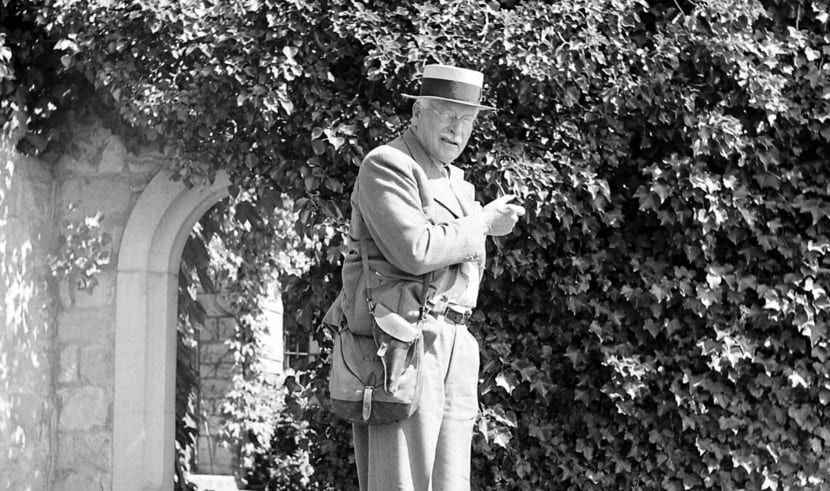
His words are a gift to society, as they help you understand yourself and everyone around you. His reflections will invite you to meditate on topics where psychology and spirituality take center stage. By reading his lessons, you will understand that self-knowledge often requires experiencing pain and accepting our own "Shadow." These words are part of his great legacy and an invitation to awaken from external dreams and look inward.
Foundations of Carl Jung's Analytical Psychology
To delve deeper into the work of Carl Jung, it is necessary to understand that his approach was not simply a reaction to Freud's psychoanalysis, but rather an expansion of the understanding of the human mind. While Freud focused on biological drives and childhood traumas, Jung proposed that the human being is a complex system where biological, psychic, and spiritual forces interact.
Jung grew up in an environment marked by family conflict. His father, a pastor, and his mother, who suffered from mental illness, created an atmosphere of tension that led young Carl to retreat into introspection. This early experience was the seed of his interest in human nature and mental health , prompting him to investigate what society often ignores: the depths of the soul.

The core of his theory is the distinction between the personal unconscious and the collective unconscious . The former contains the individual's forgotten or repressed memories and experiences. The latter, however, is a universal inheritance; it is the memory of the human species, where archetypes reside . These archetypes are primordial patterns, such as the Mother, the Father, the Hero, or the Sage, that organize our perception of the world and our behavior.
Jung's methodology was eclectic and profound. He did not limit himself to clinical observation, but integrated anthropology, mythology, religion, and philosophy . For him, myths were not fantasies, but projections of the collective unconscious that attempted to give meaning to human existence. This holistic vision allowed his therapy to seek not only the elimination of symptoms, but also the realization of human potential.
Quotes from Carl Jung for reflection and personal growth
Below, we present a comprehensive compilation of her quotes, analyzing the profound meaning behind each one to facilitate your process of personal growth and self-discovery.
- The meeting of two people is like the contact of two chemical substances: if there is a reaction, both are transformed. Reflect on the human capacity to bring about life-changing transformations through authentic contact. No genuine relationship leaves us unchanged; the other person acts as a catalyst, activating processes of change within ourselves.
- There are as many nights as there are days, and each one lasts the same as the day that comes after. Even the happiest life cannot be measured without a few moments of darkness, and the word happy would lose all meaning if it were not balanced by sadness. Life is a balance of opposites. Without the contrast of pain, we could not recognize or value joy. Duality is the essence of existence.
- If there is something we want to change in boys, we should first examine it and see if it is not something that we might be better off changing in ourselves. We often project onto others, especially our children, what we haven't healed. The child acts as a mirror reflecting the adult's shortcomings and shadows.
- When love is the norm, there is no will to power, and where power prevails, love is lacking. True love doesn't seek to dominate or establish hierarchies. When we try to control the other person, we are replacing affection with the need for power, destroying the real connection.
- Know all the theories. Master all the techniques, but when touching a human soul be just another human soul. A vital reminder for therapists and people in general about the importance of empathy and humilityThe technique is useful, but healing happens in the human encounter, not in the application of a manual.
- The psychotherapist must see each patient and each case as something new, as something unique, wonderful and exceptional. Only then will you be closer to the truth. Each individual is a unique universe. Avoiding labels allows the true essence of the person to emerge.
- Knowledge rests not only on truth but also on error. Making mistakes is not a failure, but a necessary opportunity for growth. Wisdom is built upon the ruins of our errors.
- Your vision will become clearer only when you look into your heart… He who looks outside, dreams. Who looks inside, awakens.

Self-awareness is the only path to true awakening. As long as we seek answers outside ourselves, we will remain trapped in illusion.
- One does not reach enlightenment by fantasizing about the light but by making the darkness conscious ... what is not made conscious manifests in our lives as destiny. If we don't work on our shadow and our traumas, life will repeat them in the form of destructive patterns until we integrate them.
- The main function of dreams is to try to restore our psychological balance. Dreams act as compensators. If we are too rigid in our conscious mind, the unconscious sends us images to remind us of what we have forgotten or denied.
- There is no language that cannot be misinterpreted. Each interpretation is hypothetical, since it is a simple attempt to read an unknown text. It acknowledges the inherent subjectivity of all communication. There is never a single truth in the interpretation of a message.
- If it were not a fact of experience that the supreme values reside in the Soul, Psychology would not interest me in the least, since the Soul would then be nothing more than a miserable vapor. Jung defended the existence of the soul against extreme materialism, giving it a sacred and transcendental dimension.
- We cannot change anything without first understanding. Condemnation does not liberate, it oppresses. Repressing or judging behavior only hides it. Conscious acceptance is the only real foundation upon which transformation can occur.
- People will do anything, no matter how absurd, in order to avoid facing their own soul. Fear of one's own essence leads us to evasive behaviors, addictions, and moral rigidity in order to avoid feeling emptiness or inner pain.
- We must not pretend to understand the world only by the intellect. Intelligence failure is only part of the truth. Intuition and sensations complete our view of the world. The intellect is a tool, but it is not the sole observer.
- If you are a talented person, it does not mean that you have already received something. It means that you can give something. Talent is not a personal trophy, but a gift meant to be offered for the common good and service to others.
- Children are educated by what the great does and not by what he says. Example is the most powerful educational tool. Words are just noise if the adult's actions contradict the message.
- Life not lived is a disease from which you can die. Repression of one's own being and renunciation of authenticity generate chronic frustration that can lead to psychic collapse or deep depression.
- You are what you do, not what you say you are going to do. Authenticity is demonstrated through concrete action. Promises are mere projections; reality is what we do.
- The shoe that fits one man tightens another; there is no recipe for life that works in all cases. There are no universal solutions. Each therapeutic and life process is individual and must be adapted to the psychic architecture of each person.
- Great talents are the most charming and often the most dangerous fruits on the tree of humanity. They hang on the thinnest and most easily broken branches. Genius often comes with extreme psychological fragility that requires special care to avoid breaking under the pressures of the world.
- We cannot live the evening of life with the same program as the morning, because what in the morning was a lot, in the evening it will be little, and what was true in the morning, in the afternoon will be false. Maturity requires a reevaluation of values. The goals of youth are not useful for the fulfillment of old age.
- I am not what happened to me, I am what I chose to be. Although the past may condition us and leave scars, we have the conscious ability to choose our response and define our current identity.
- We were born at a specific time and place, and just as you age a wine, we possess the qualities of the year and season in which we were born. Astrology claims nothing more.

Jung saw in astrology a sum of ancient psychological knowledge about human nature and the influence of temporal cycles on the psyche.
- Emotion is the main source of conscious processes. There can be no transformation of darkness into light, nor of apathy in motion without emotion. Without emotional engagement, behavioral change is superficial. Emotion is the energy that drives true evolution.
- The unconscious is not a bad thing by nature, it is also the source of well-being. Not only darkness but also light, not only bestial and demonic, but also spiritual and divine. The unconscious is the cradle of creativity, passion, and love. We shouldn't fear it, but rather learn to communicate with it.
- Those who learn nothing from the unpleasant facts of life force cosmic consciousness to reproduce them as many times as necessary to learn what the drama of what happened teaches. What you deny submits you; what you accept transforms you. Resisting pain prolongs suffering. Acceptance is the key that unlocks the door to healing.
- Loneliness does not come from not having people around you, but from not being able to communicate the things that seem important to you, or from holding certain points of view that others consider unacceptable. True loneliness is the lack of deep connection and the inability to be understood in our essence.
- When the most intense conflicts are overcome, they leave a sense of security and tranquility that is not easily disturbed. It is precisely these intense conflicts and their resolution that are needed to produce valuable and lasting results. Crises are not errors of the system, but the engine of real psychic growth.
- The scariest thing is to accept yourself completely. Recognizing the totality of our nature, including our evil, selfishness, and weakness, is the most difficult but most liberating task.
- The little world of childhood with its family environment is a model of the world. The more intensely the family forms character, the better the child will adapt to the world. The family unit is the first map with which we navigate reality.
- A man who has not passed through the hell of his passions has never overcome them. Overcoming is not about avoidance, but about direct confrontation and subsequent integration of desire and pain.
- The pendulum of the mind alternates between meaning and nonsense, not between good and evil. Good and evil are moral constructs; the psyche, on the other hand, seeks coherence, purpose, and meaning.
- The healthy man does not torture others, usually it is the tortured who becomes the torturer. The harm inflicted on others is often a projection of unhealed trauma. The perpetrator is frequently a victim who was unable to process their pain.
- In one way or another we are parts of a single, all-encompassing mind, a single great human being. We are all connected through the collective unconscious, sharing the same fundamental psychic structure.
- The privilege of a lifetime is becoming who you truly are. The process of individuation consists of shedding social masks to achieve absolute authenticity.
- Embrace your madness, for life itself is completely illogical. Excessive sanity can be a mask that distances us from our true personality. Recognizing our "crazy" side protects us from becoming its victims.
- Depression is like a lady dressed in black; if she appears, don't reject her. Invite her to sit down, listen to what she wants to tell you. Psychological symptoms are messengers. Depression often indicates that a part of our life has died and needs to be transformed.
- Everything that irritates us about others leads us to an understanding of ourselves. Irritation is a projection mechanism. What we cannot tolerate in others is often the part of our own shadow that we refuse to see.
- Do not hold on to those who are moving away from you, because that way those who want to come closer will not arrive. Detachment is the necessary condition to allow the arrival of people aligned with our present state.
- Synchronicity: temporal coincidence that opposes causality. There are events that are not linked by cause and effect, but by a deep psychic meaning that indicates we are on the right path.
- The shadow is that which a person does not wish to be. Only by integrating it can we aspire to fulfillment, preventing it from becoming an unconscious monster that directs our lives from the shadows.
- The process of individuation is the act of reconciling opposites within oneself. It's not about eliminating what's "bad," but about integrating all the parts to become a whole being. Life calls for wholeness, not perfection.
- Psychic reality is so complex that it can only be grasped by intuition and expressed through symbols. Logical thinking is insufficient to describe the mysteries of the soul.
- Nothing promotes the growth of consciousness as much as the internal confrontation of opposites. The tension between what we are and what we want to be is the source of the psychic energy necessary to evolve.
- The fool is the precursor of the savior. Those whom society labels as naive or crazy often possess a sensitivity that allows them to see truths that reason ignores.
- True therapy consists of helping the patient find themselves. The therapist is a guide, a companion, but never someone who imposes an external model of "normality".
- What we do not bring to our consciousness, comes to us as fate. We repeat traumatic patterns and fatal mistakes until we have the courage to face them head-on and become aware of them.
- Faith, hope, love, and insight are the highest achievements of human endeavor. These values are not free gifts, but achievements attained through life experience and inner work.
- All mythology is a projection of the collective unconscious. Myths are the external expression of archetypes that reside in the biological and psychic structure of all human beings.
- The heart burns and a secret restlessness gnaws at the root of our being. This tension is the spark that drives us to seek a transcendent meaning beyond the banality of everyday life.
- Our psyche is configured according to the structure of the universe. The macrocosm and the microcosm are reflected; what happens in the universe has an echo in human subjectivity.
- If you want to find paths, don't despise madness. Reason is a useful tool, but intuition and imagination are what open the doors to creation and innovation.
- The growth of the mind is the expansion of the range of consciousness. Every step towards maturity is a painful achievement that involves breaking through veils of ignorance and prejudice.
- I don't aspire to be a good man. I aspire to be a complete man. Being "good" often involves suppressing the shadow to fit in. Being "whole" involves integrating both light and darkness.
- In every chaos there is a cosmos, in every disorder a secret order. Behind the deepest personal crisis there is often an organizing purpose that prepares us for a new evolutionary stage.
- The collective unconscious contains the entire spiritual heritage of humanity's evolution. We are not blank slates; we are born with a structure of primordial images that predispose us to certain reactions and perceptions.
- Intuition doesn't tell you what things mean, but rather senses their possibilities. While reason analyzes the past and present, intuition detects the potential of the future.
- Only in our creative acts do we enter the light and see ourselves as whole. Artistic creation is a path to healing where the unconscious can express itself and be integrated.
- The separation between faith and knowledge is a symptom of the mental disorder of our times. Jung advocated for an integration where reason did not negate spiritual experience, but rather they coexisted in balance.
- The worst thing that can happen to anyone is to be completely understood. Mystery is the foundation of freedom and identity. To be fully understood is, in a way, to be reduced to a definition.
- Time is a child at play. I am young and old at the same time. Consciousness transcends chronological age; we are the sum of all our life stages coexisting in the present.
- Real life is always tragic, and those who don't know that have never lived. Recognizing the inherent tragedy of existence is the first step to living with authenticity and depth.
- The spirit is not subject to the laws of space and time. There is a dimension of the psyche that operates beyond material physics, connecting us with the eternal.
- Everything that irritates us about others leads us to an understanding of ourselves. If someone deeply upsets us, it is likely that they are reflecting a part of our own shadow that we refuse to accept.
- Consciousness is a condition of being. Without the ability to realize who we are and where we are, the "self" would not have a real existence.
- He who does not perceive the drama of his own end is not in normality but in pathology. Awareness of death is fundamental to giving meaning and urgency to life.
- What you resist, persists. Resistance is the energy that keeps conflict alive. Only acceptance allows the flow of life to continue.
- Nothing has a stronger psychological influence on one's environment than the unlived life of a parent. The emptiness and frustration of the parents are transmitted to the children as an invisible but heavy burden.
- We are all born originals and die copies. In childhood we are authentic, but social conditioning and fear of rejection turn us into simplified versions of ourselves.
- Fanaticism is an overcompensation for doubt. Those who shout their certainties the loudest are often the ones who fear uncertainty within themselves the most.
- All forms of addiction are bad, no matter if the narcotic is alcohol, morphine, or idealism. Any mechanism we use to evade the reality of our own soul is a trap that holds us back.
- The separation of psychology from the premises of biology is purely artificial. The psyche and the body are an inseparable unit; what happens in the mind affects the organism and vice versa.
- True love always establishes lasting and responsible bonds. It requires sacrificing one's own illusions to make way for the reality of the other.
- Synchronicity is the temporal coincidence that opposes causality. It is the bridge between mind and matter, where the external world reflects the internal state of the subject.
- There is no awareness without pain. Tearing away the veils of ignorance and facing one's own shadow is a painful process, but it is the only path to freedom.
- True therapy consists of helping the patient find themselves. The goal is not social adaptation, but the realization of one's own nature.
- What you don't face will continue to happen to you as fate. Repetitive patterns are a sign that there is something in the unconscious that is asking to be looked at.
- The archetype represents psychic probability. These are innate tendencies that lead us to react in certain ways to universal situations.
- Faith, hope, love, and insight are the highest achievements of human endeavor. They are not acquired through inheritance, but are won through struggle and experience.
- The heart burns and a secret restlessness gnaws at the root of our being. This existential anguish is not an illness, but the soul's call to expand its consciousness.
- Our psyche is configured according to the structure of the universe. We are a reflection of the whole; the order of the cosmos dwells in the depths of our being.
- If you want to find paths, don't despise madness. Reason keeps us on the well-trodden path; madness is what dares to explore unknown territories.
- The growth of the mind is the expansion of the range of consciousness. It means integrating more parts of ourselves, accepting the complexity of our nature.
- I don't aspire to be a good man. I aspire to be a complete man. Integrity is preferable to moral perfection, because integrity includes the acceptance of our darkness.
- In every chaos there is a cosmos, in every disorder a secret order. The crisis is the prelude to a new, higher psychic organization.
- The collective unconscious contains the entire spiritual heritage of humanity's evolution. We don't start life from scratch; we bring with us the wisdom and fears of our ancestors.
- Intuition doesn't tell you what things mean, but rather senses their possibilities. It is the radar of the unconscious that tells us where to direct our attention.
- Only in our creative acts do we enter the light and see ourselves as whole. Art is the language of the soul that allows the invisible to be materialized.
- The separation between faith and knowledge is a symptom of the mental disorder of our times. We need to recover the sense of the sacred so as not to get lost in the emptiness of materialism.
- The worst thing that can happen to anyone is to be completely understood. Keeping a part of ourselves impenetrable is what preserves our individuality and mystery.
- Time is a child at play. I am young and old at the same time. Our essence does not age; only the outer layers of our existence change.
- Real life is always tragic, and those who don't know that have never lived. Accepting fragility and finitude is what allows us to love intensely.
- The spirit is not subject to the laws of space and time. There is a divine spark in man that is eternal and transcends matter.
- Everything that irritates us about others leads us to an understanding of ourselves. Our neighbor is the most honest mirror of our own shadow.
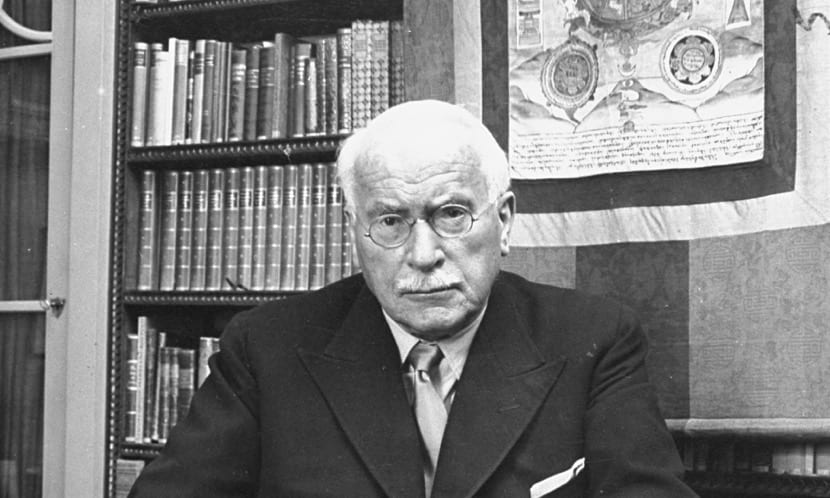
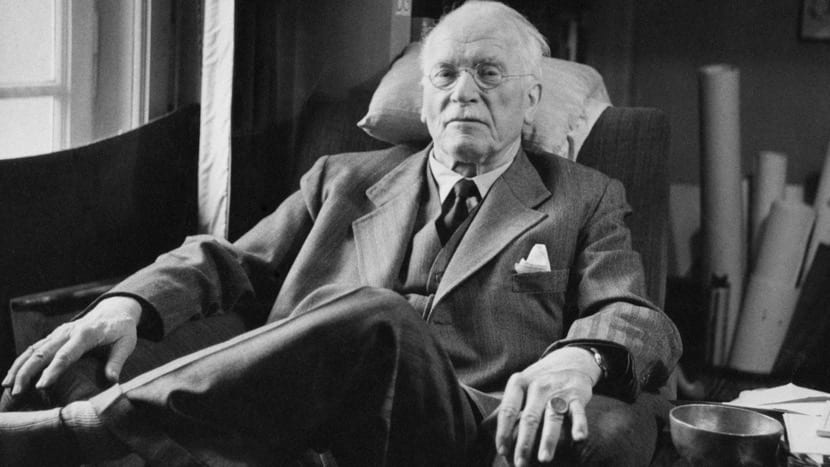


The path to individuation and shadow integration
To understand the magnitude of Carl Jung's work, it is essential to consider the concept of the Shadow . Jung defined the shadow as everything that a person does not wish to be or that has been rejected for not fitting into their idealized self-image (the Persona ). The Persona is the mask we wear to adapt to society, the social "self." However, everything that the mask conceals falls into the shadow.
When we repress these traits—such as anger, envy, ambition, or even talents deemed inadequate—they don't disappear, but rather recede into the unconscious, where they acquire a dangerous power. As Jung aptly stated, what you deny submits you; what you accept transforms you . An unintegrated shadow manifests itself through projections: we begin to hate in others what we cannot accept in ourselves.
The process of individuation is the central task of adult life. It is not the same concept as individualization (separating oneself from others), but rather the conscious effort to become a unique and indivisible individual. It consists of reconciling opposites: light and darkness, the masculine (Animus) and the feminine (Anima), reason and intuition. It is not about achieving moral perfection, but about attaining psychic integrity.
A complete man is one who has walked through the hell of his passions and returned with the wisdom of one who knows himself without veils. This path requires courage, for it involves recognizing that within us dwells both the capacity for the purest goodness and the deepest destructiveness. No one can sink so low unless they possess great depth , suggesting that the darkest crises are often the prelude to the greatest expansion of consciousness.

On this path, archetypes act as universal templates. They are primordial images that influence our behavior and perceptions. From the figure of the "Hero" to the "Sage" or the "Mother," these structures of the collective unconscious guide us, often invisibly. By understanding these patterns, we cease to be victims of fate and become the architects of our own lives, understanding that our personal struggle is, in reality, a universal human struggle.
Jung's relationship with alchemy and astrology was not superstition, but a search for analogies. He saw in the transmutation of metals (the transformation of lead into gold) a metaphor for the psychic process: transforming the "lead" of suffering, trauma, and depression into the "gold" of consciousness and wisdom. For him, alchemical gold was realized individuation.
For Jung, the human psyche lives in an indissoluble union with the body and nature. Mental health depends on our ability to live in harmony with our instincts. When we deny biology or spirituality, we create a split within ourselves that ultimately manifests as illness. True healing occurs when spirit and matter are reconciled.
Finally, it is vital to remember that for Jung, neurosis or depression were not simply pathologies to be eliminated, but impulses for the expansion of consciousness. A symptom is a wake-up call from the soul, asking us to change the direction of our lives. By inviting the "lady in black" to sit at our table and listen to her, we transform pain into a tool for evolution. Suffering, when its meaning is understood, becomes the fuel for transformation.
Carl Jung's wisdom teaches us that true fulfillment lies not in avoiding conflict, but in consciously resolving it. By recognizing that we are part of a single, all-encompassing mind , we transcend the individual ego to connect with the universal human essence, where light and shadow coexist in a dynamic and creative balance, allowing us to live an authentic, coherent, and profoundly human life.
Table of Contents